A hidden life, lived quietly with God.
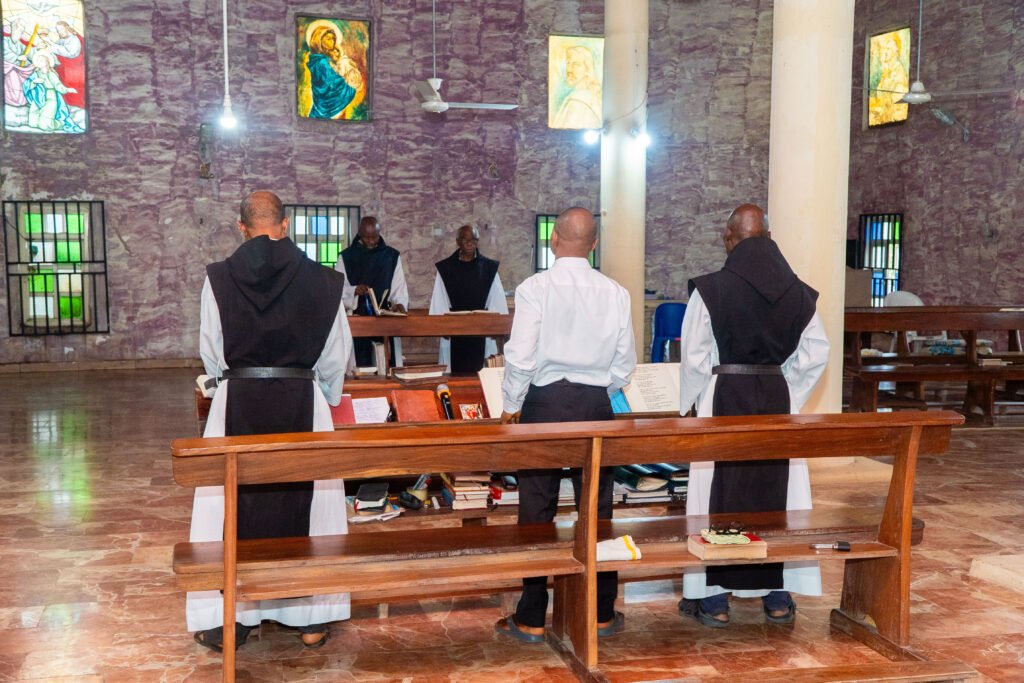
Cistercian life is a hidden life: the monks step away from the world’s noise to pray for everyone else.
Sons of the Cistercian fathers.
We are Cistercian Trappists, sons of Saints Robert, Alberic, and Stephen Harding, and of Saint Bernard of Clairvaux, living the Rule of St. Benedict and the Constitutions of the Order of Cistercians of the Strict Observance.
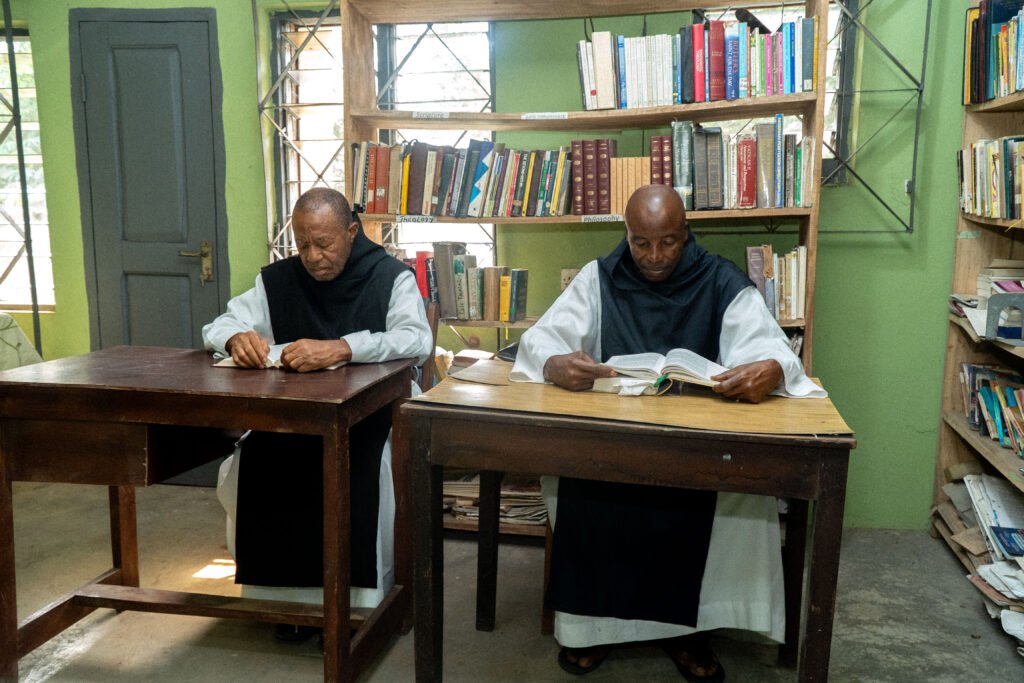
Our identity is found in silence, liturgical prayer, Lectio Divina and manual work. Through this hidden life of prayer and simplicity we seek union with God, and intercede for the world.
The foundational pillars.
Prayer and silence are the foundational pillars of Cistercian life designed to strip away worldly distraction and foster an unbroken, receptive communion with God. These disciplines allow the monk to listen for the divine presence and to live a deeply contemplative life.
Divine reading: four movements of the heart.
Lectio Divina is a foundational pillar of the monastic day a slow, prayerful, meditative reading of Scripture in which the monk seeks communion with God rather than intellectual knowledge. It transforms solitude and silence from empty space into an active listening to the presence of God.
Read on slowly. The page itself grows quieter, as the reading does.
Reading
Reading a short passage of Scripture very slowly and repetitively, often whispering it aloud as one’s own savouring the words as one would savour fine food.
Meditation
“Chewing” on a resonant word or phrase, repeating it and pondering what it means in one’s own heart and life.
Prayer
Responding naturally to what has been read and reflected upon turning the meditation into a direct, heartfelt conversation with God.
Rest
Resting quietly in the silent, loving presence of God letting go of words and thoughts, to simply be with Him.
Up to five hours a day, offered in silence.
The monks devote several hours daily, up to five, to physical labour, above all on the farm. Work holds profound spiritual significance in our tradition: it is performed with contemplation, in an attitude of inner silence and prayerfulness.
Simplicity and humility are its intertwined companions virtues that strip away ego and complexity, freeing the monk to love God and serve the community in an ordinary, obscure and laborious way of life.
Under Mary’s protection since 1098.
From the Order’s foundation in 1098, every Cistercian and Trappist monastery is dedicated directly to the Blessed Virgin Mary. The monks view her not only as intercessor but as companion, the perfect model of Christian discipleship, whose hiddenness, humility and receptivity to God’s will the contemplative strives to imitate.
Written c. 530 AD seventy-three chapters.
Written by St. Benedict of Nursia, the Rule describes the practical and spiritual life of the monks and nuns of all Benedictine and Cistercian monasteries. The community references it as a foundational text second only to Scripture emphasizing prayer, simplicity, manual labour and deep silence.
The Rule, alive in our own time.
The Constitutions and Statutes of the Order of Cistercians of the Strict Observance are the governing documents of the Order, combining the timeless Rule with modern monastic legislation to define the community’s spiritual life, governance and daily practice.
Read the founding documents →
Live one day of this life.
The surest way to understand Cistercian life is to enter its rhythm for a few days.